

The Hapus mango rate on AlphonsoMango.in starts from Rs 1,849 per dozen for Ratnagiri or Devgad Alphonso. Hapus is the Marathi name for Alphonso. Larger fruit costs more, up to Rs 5,399 for the largest Ratnagiri option. Check the product page for each size.
Hapus mango rate by listing
Hapus is Alphonso, and we sell it by the dozen. The rate on each listing depends on the weight of the fruit, so the figure that matters is the one beside the size you pick. These are the starting points on the live pages. Check the product page for the exact price of each size.
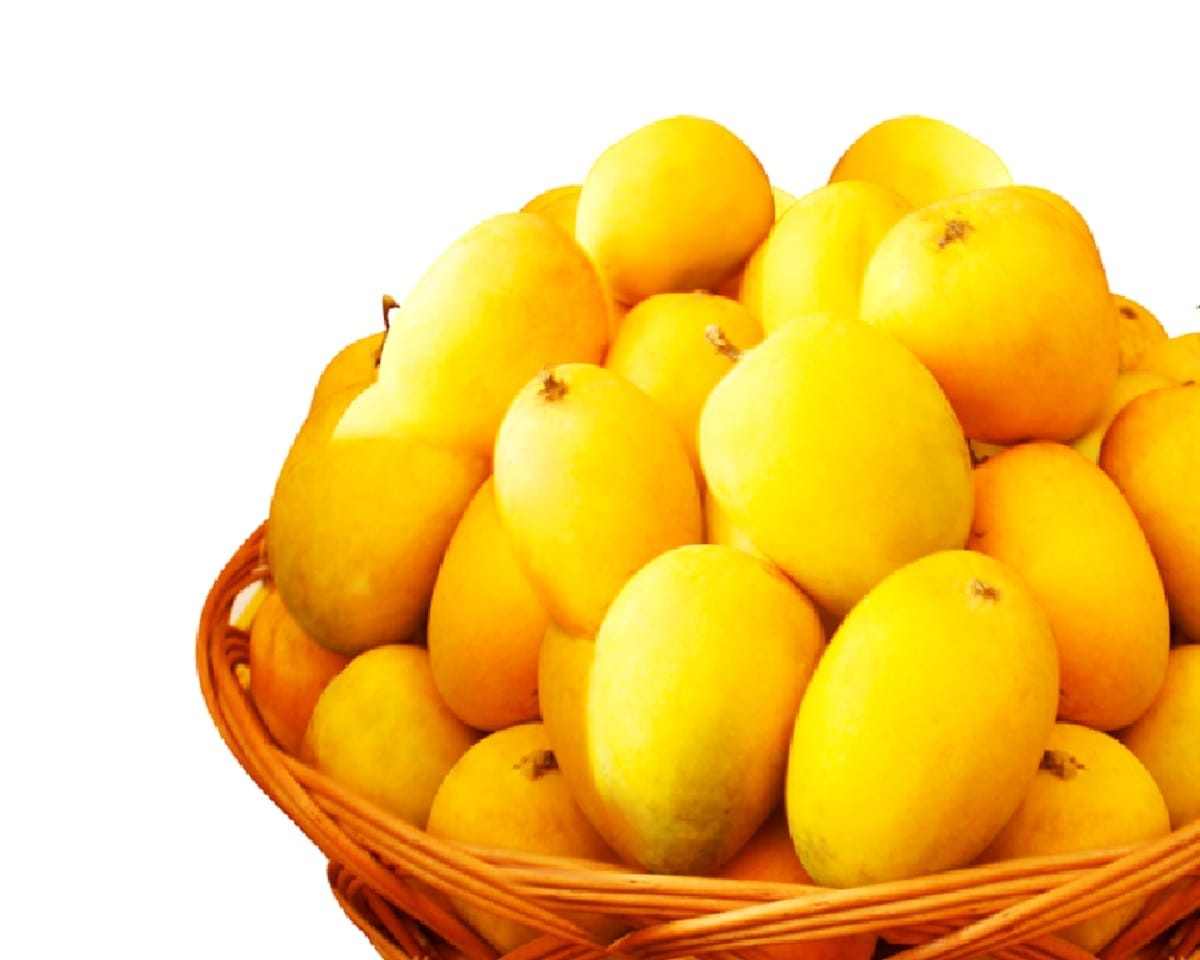
| Listing | Rate |
|---|---|
| Ratnagiri Alphonso Mango | From Rs 1,849 per dozen, up to Rs 5,399 for the largest option |
| Devgad Alphonso Mango | From Rs 1,849 per dozen |
| 1 dozen order-online page | From Rs 1,849 per dozen, up to Rs 10,499 for the largest listing |
| Alphonso Mango Pulp Tin | From Rs 590 (850 g and 3.1 kg tins) |
A dozen weighs roughly 1.8 to 3.3 kg depending on grade. We do not publish a per-kilo figure. If you want to work out how many fruits a kilo holds, read our guide to the Alphonso mango 1kg price.
What Hapus means, and why you see so many spellings
Hapus is the Marathi name for the Alphonso mango. You will also see Hafus, Haphus, Hapoos, Hapus aam and Hapus amba. In Gujarati it is હાફૂસ કેરી. All of them point to the same variety, which is named after Afonso de Albuquerque, and which is described as having a rich, creamy and non-fibrous pulp.
Hapus from the Konkan is not the only mango sold in India under a famous name. Pairi, Kesar and Totapuri are other mangoes with their own listings and their own rates. We list Pairi 1 dozen at Rs 2,799 and Kesar from Rs 999 per box, and neither is Alphonso.
Why one Hapus rate differs from another
Two dozens can both be called Hapus and still carry very different rates. These are the reasons we can stand behind.
- Weight per fruit. Alphonso generally weighs 150 to 300 g, and larger fruit costs more.
- Origin. Hapus from Ratnagiri and Devgad is the fruit the Alphonso GI covers. The GI registry records Devgad Alphonso, application 379, as merged with Alphonso Mango application 139.
- Handling. Our fruit is hand-harvested with a zela pole fitted with a catching net, and harvest is done at Brahma Muhurta, before dawn.
- Season. The crop is harvested from about February to June, so supply is short and fresh Hapus is not sold in other months.
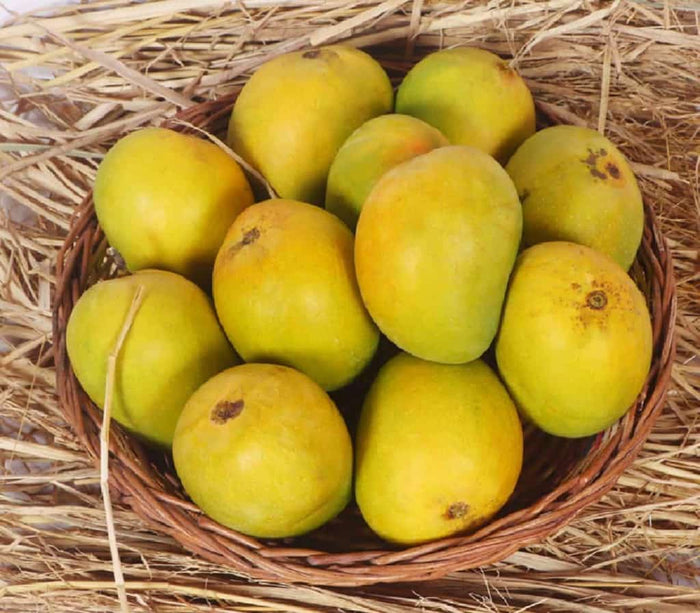
Ratnagiri and Devgad start at the same rate on our site. Devgad is a taluka in Sindhudurg district and Ratnagiri is a district. We do not claim that one is better, and we do not compare their harvest timing. Our fruit comes from 48 villages of the Ratnagiri and Devgad belt on the Konkan coast.
Hapus mango rate in Mumbai, Pune and Delhi
People search for the Hapus mango rate by city, and the honest answer is that our rate does not change with the city. What changes is the delivery time. We dispatch by Blue Dart, and about 65% of Indian PIN codes get next-day delivery. Check your PIN code at checkout.
We do not quote mandi or street rates, because they move with the grade and the day, and we cannot verify them. For a local page, see Hapus mango rate in Pune, Mumbai or Delhi. The rates above are the same for all three.
How to read a Hapus rate that someone quotes you
A shopkeeper, a WhatsApp seller or a website may quote the Hapus rate per piece, per dozen, per peti or per kilo. Before you compare, turn every quote into the same unit by asking three questions. How many fruits are in the box? What does each fruit weigh? Is delivery included in the rate? A low rate for a box of small fruit can cost more per mouthful than a higher rate for larger fruit, and only the answers tell you which. Write the answers down, because they are also what you will need if something goes wrong at delivery.
Checks before you pay for Hapus
A rate means little unless the fruit is what the label says. Ask any seller for these things:
- The GI Authorised User certificate number. Ours is AU/5974/GI/139/260 (GI No. 139).
- The place the fruit was grown.
- The weight of each fruit and the count in the box.
- The FSSAI licence number of the seller.
- How the fruit was ripened.
We do not use carbide. Our Alphonso mangoes are ripened naturally on hay beds. Calcium carbide ripening is prohibited in India under Regulation 2.3.5 of the Food Safety and Standards (Prohibition and Restrictions on Sales) Regulations, 2011. No bucket or water test proves how a mango was ripened, and we would treat any such test only as a rough clue. See our guide on how to identify authentic Hapus for more.
Season and off-season rate options
Fresh Hapus is harvested from about February to June, with the best supply from March to May. The 2027 season opens on 1 February 2027. Until then the fresh-mango listings show as unavailable. We do not sell cold-stored Alphonso as a substitute.
The Alphonso Mango Pulp Tin is available all year, from Rs 590, and it suits aam ras, lassi and desserts. Our aamras recipe shows the method.
Hapus for restaurants, hotels and gifting
We supply restaurants and hotels as well as households. We do not publish bulk terms, so write to support@alphonsomango.in or call 8369048029 with your quantity, city and dates, and we will reply with what we can do. For gifts, start from the gifting page.
More than 47,000 customers, including offline and marketplace sales, have bought from us since 2019. If a box arrives damaged, report it within 24 hours of delivery. There is no GST on fresh mangoes.
Shop the mangoes mentioned here


People also ask
What is the price of Hapus mango?
Hapus mango on AlphonsoMango.in starts from Rs 1,849 per dozen for Ratnagiri or Devgad Alphonso. The largest Ratnagiri option goes up to Rs 5,399, and the largest listing on the order-online page goes up to Rs 10,499. Check the product page for the price of your size.
How much is a dozen Hapus mango?
A dozen Hapus, which is Alphonso, starts from Rs 1,849 and weighs roughly 1.8 to 3.3 kg depending on grade. Price rises with fruit weight. Fresh dozens are sold in season only, from about February to June, and the 2027 season opens on 1 February 2027.
Is Hapus and Alphonso mango the same?
Yes. Hapus is the Marathi name for Alphonso, and Hapus aam, Hafus and Hapoos are spellings of the same variety. Pairi, Kesar and Totapuri are different mangoes with their own listings. Hapus grown in Ratnagiri and Devgad falls within the region covered by Alphonso GI No. 139.
Why is Hapus mango expensive?
Hapus is harvested only from about February to June, grown in a limited region, and picked by hand with a zela pole and catching net. Larger fruit costs more. Compare weight, origin, ripening method and the seller's GI certificate number, not only the headline rate.
Related searches
- Ratnagiri Alphonso mango
- Devgad Alphonso mango
- Alphonso mango 1kg price
- Ratnagiri Hapus aam price
- Hapus mango price in Mumbai
- Alphonso mango rate in Pune
- Devgad mango price
- Alphonso mango GI tag
Sources and further reading
- Government of India GI Registry, Devgad Alphonso Mango, application 379 (merged with application 139), accessed October 2026.
- S.S. Rana & Co., Mangoes from Konkan region of Maharashtra will be known as Hapus, accessed October 2026.
- Wikipedia, Alphonso mango, accessed October 2026.
- Food Safety and Standards Authority of India, Prohibition and Restrictions on Sales Regulations, 2011, Regulation 2.3.5 (compendium of 2 April 2025), accessed October 2026.
Written by Prashant Powle, founder of AlphonsoMango.in. Last reviewed October 2026.