
48 villages.
One GI promise.
Delivered by air.
From the laterite orchards of Konkan to your doorstep — a 600km corridor of mango farms, AI-tracked at every step, ripened the way farmers have done for generations.
He left the corporate world to find honest farmers
In 2019, Prashant Devendra Powle did something most people would call risky. He quit a stable corporate career and drove the Mumbai–Ratnagiri–Devgad road not once but dozens of times — stopping at farms, asking questions, tasting fruit, testing soil, talking to farmers who had been growing Hapus for three and four generations.
"Every market stall said GI-tagged. Very few actually were. I needed to find the farmers who would never lie about their fruit — even when it cost them more to do it right."
— Prashant Devendra Powle, Founder, AlphonsoMango.inWhat he found along that road changed everything. Hidden behind the highway, past narrow village lanes and across streams with no bridges, were families who had been growing Alphonso using methods their grandparents taught them — no carbide, no chemicals, no shortcuts. Just laterite soil, coastal air, and the traditional Aadi hay-bed that has defined authentic Hapus ripening for over a century.
The challenge was supply reliability. A single village could be wiped out by unseasonal rain, a pest attack, or a poor flowering. Prashant's answer was geographical redundancy — not one farm, not one village, but a living network of 48+ source villages spread across 600km of the Konkan coast. If one area yields less, the corridor absorbs the gap. Your order is never at risk.
This network, anchored by farm partner Powle Home Foods in Ratnagiri, is what makes AlphonsoMango.in fundamentally different from a co-operative or a single-origin seller. It is a quality-first supply chain built on relationships — not contracts, not commodity pricing, not middlemen.
Led a field research taskforce across Maharashtra, Gujarat, Karnataka, Uttarakhand, and Kashmir to source farmers who use traditional natural techniques. Founded Powle Home Foods in 2019 with one mission: bring honest farm produce directly to the consumer without adulteration, without middlemen, without compromise.
Mumbai to Devgad —
The Mango Highway
Every village on this 600km route contributes to your box. Geographical redundancy means your mango never depends on a single harvest.
How AI gets your mango from a village in Devgad
to your door in Delhi
We are not a technology company. We are a mango company that uses technology precisely where it makes the fruit better — not as a marketing gimmick, but as a precision tool to protect what generations of Konkan farmers have perfected.
AI Demand Forecasting — From Order to Orchard
Before the season starts, our demand model analyses the previous season's order patterns, current pre-booking trends, city-wise consumption data, and NRI gifting signals to tell each village partner exactly how many dozens to hold back for AlphonsoMango.in orders. No over-harvesting. No shortage. Your order is reserved before the fruit even leaves the tree.
IoT Ripening Chambers — Brix Tracked Every 4 Hours
The Powle Home Foods packhouse in Ratnagiri uses temperature and humidity sensors in hay-bed ripening chambers. Every 4 hours, ripening progression data is logged. When fruit crosses 16°Brix moving toward Stage 3, the system triggers packing and dispatch scheduling. Mangoes dispatched too early taste flat. Too late and they bruise in transit. The sensors remove the guesswork that has plagued manual ripening for decades.
Route Optimisation — Which Flight Gets It There Freshest
From Mumbai CSIA, our logistics AI selects the fastest available air cargo path to your city — not always the direct flight, but the one with the shortest ground-handling time at destination. For Delhi, Bangalore, Hyderabad, Chennai, Kolkata: 24-48 hours. The system monitors weather delays and rebooks if a flight gets held. You receive WhatsApp updates at packhouse dispatch, flight departure, and last-mile handoff.
Predictive Dispatch — Mangoes That Ripen In Your Home
This is the piece most sellers get wrong. If a mango is dispatched fully ripe (Stage 4), it arrives over-ripe after 2 days of transit. AlphonsoMango.in dispatches at Stage 2–3 (Brix 12–18°). Our transit time model calculates exactly where the fruit will be on the Brix curve when it arrives at your door — so it reaches Stage 4 perfection (18 to 24°Brix) at the moment you open the box. The mango finishes ripening in your home, the way it was meant to.
NRI Gifting Intelligence — Your Recipient Guided Every Step
When an NRI in the USA, UAE, or UK places a gift order on AlphonsoMango.in, our gifting flow activates a separate communication sequence to the Indian recipient — not just the sender. The recipient gets a WhatsApp message when the order is placed, when it dispatches, estimated delivery time, and ripening instructions. So your parents in Mumbai know exactly when to expect their mangoes — and how to ripen them perfectly if they arrive at Stage 2-3.
Quality Redundancy — Why 48 Villages Beat 1 Farm
A single farm — even an excellent one — is exposed to the same weather event, the same pest, the same flowering failure. Our 48+ village network is geographically distributed across 600km of the Konkan coast with different elevation, rainfall, and soil profiles. When heavy pre-monsoon rain hits Devgad in mid-May, Ratnagiri is often unaffected. When early-season fruit in Chiplun is thin, Lanja and Rajapur compensate. The corridor is the insurance policy that keeps your order fulfilled at peak Brix, every time.
The 5 stages of your mango's journey
Source: AlphonsoMango.in per-batch refractometer data, Powle Home Foods, Ratnagiri 2026. GI Tag AU/5974/GI/139/260.
When the coast runs too hot, we switch villages. In minutes.
The Konkan coast is 700km long. Temperature, humidity, sea breeze strength, and air salinity are not uniform across those 700km — they shift by village, by week, sometimes by day. A heat spike that damages fruit in one micro-zone leaves the village 40km south completely unaffected.
Most mango sellers are committed to a single farm or a single taluka. When that zone has a bad week — excessive heat before harvest, unseasonal rain, a low-pressure system off the coast — their quality drops and your order suffers.
AlphonsoMango.in built its 48-village network specifically to eliminate this single point of failure. Our AI monitors temperature, sea wind patterns, and relative humidity across the entire corridor in real time. When one village crosses a quality threshold, we switch sourcing to the next optimal zone — without pausing a single order.
"If the heat at a farm today is such that the mango will arrive at your home tasting flat — we don't send that mango. We find you a better one. The 700km corridor is our insurance policy."
— AlphonsoMango.in Quality Protocol, Season 2026When ambient temperature at a village exceeds 38°C for two consecutive days pre-harvest, AI flags that batch. Fruit harvested in excessive heat develops uneven Brix and thin skin prone to transit bruising. That village is paused from sourcing until conditions normalise.
Unseasonal high humidity before harvest can dilute the fruit's sugar concentration — lowering Brix. Pre-monsoon rain events in May are the biggest risk. AI tracks relative humidity daily across all 48 villages and adjusts sourcing weight automatically.
The south-west sea breeze is the secret ingredient of Konkan Alphonso. It moderates temperature and carries mineral salt air that the mango tree absorbs through the season. The right wind speed and direction at the right time of year is what gives coastal Alphonso its signature aroma — unmatched by inland varieties.
All 48 villages in our network are in clean-air coastal zones — AQI consistently below 40. The absence of industrial pollution means no chemical particle contamination on fruit skin. This matters for GI certification and for consumers who eat mangoes without peeling them.
How we replace a hot village in under 2 hours
When AI detects a heat event, this is the exact sequence that runs — before a single order is affected.
AI detects Malvan ambient temp at 40°C for 48hrs. Forecasted to persist 3 more days. Fruit at risk of premature over-ripening and skin splitting in transit.
Village: PausedSystem scans the next 3 viable villages within 80km: Kankavli (28°C ✓), Kudal (29°C ✓), Devgad (27°C ✓). Brix data from last batch checked. Powle Home Foods partner in Kankavli contacted.
Replacement: FoundOrders originally allocated to Malvan are fulfilled from Kankavli. Same GI certification, same carbide-free protocol, same Brix guarantee. Your order is not delayed. You may not even know a switch happened.
Your Order: Unaffected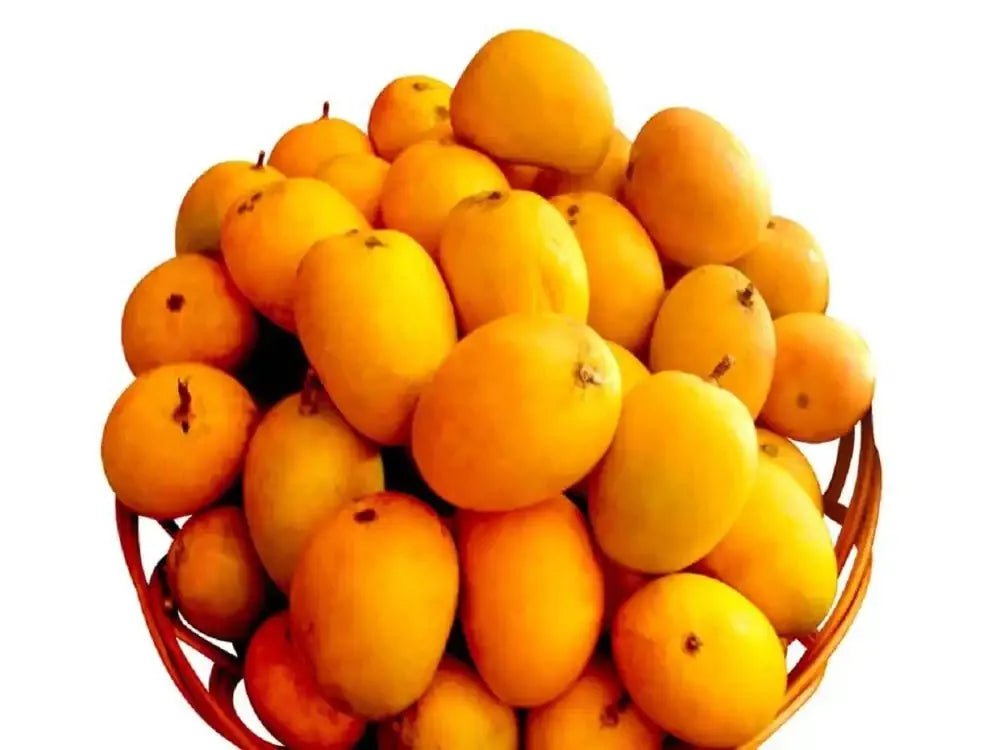
Ratnagiri Alphonso orchard — GI AU/5974/GI/139/260
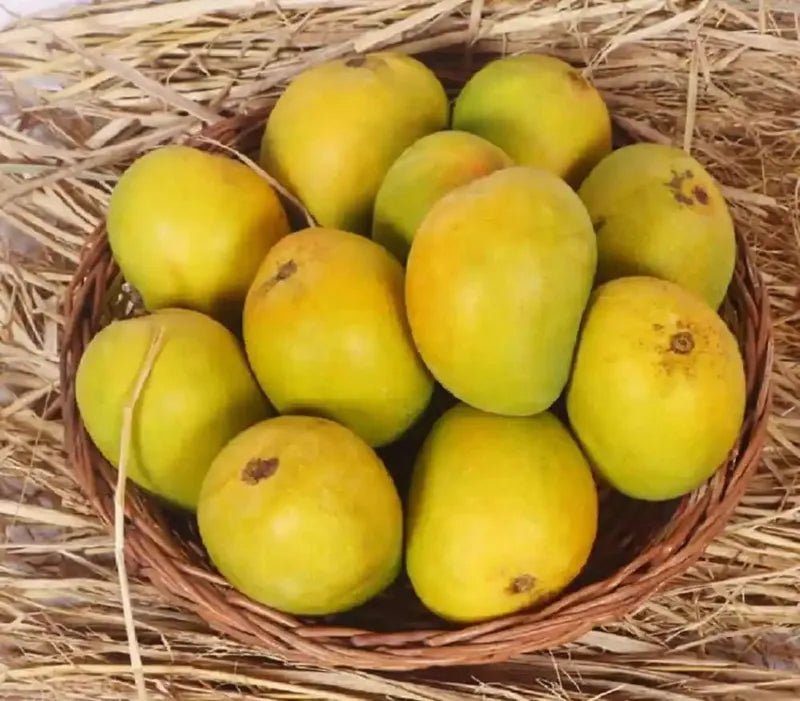
Devgad Alphonso — GI AU/6932

AlphonsoMango.in — FSSAI 10020022011783
Why we will always be better than a single-origin seller
A co-operative or single-taluka seller is at the mercy of one micro-climate. When conditions are good, their product is excellent. When conditions are poor — a heat wave, unseasonal rain, a pest cycle — their quality suffers and there is nothing they can do. We designed our supply chain specifically to never be in that position.
- Single farm collapses under one heat event. Our 48-village corridor absorbs it in minutes.
- Co-operatives source from one taluka. We source from three districts — Raigad, Ratnagiri, Sindhudurg.
- Fixed-source sellers can't optimise for Brix weekly. We route your order to whichever village is at peak Brix that specific week.
- Most sellers ripen at one stage for all customers. Our AI dispatches at the stage that arrives perfectly ripe at your specific city's transit time.
- No other seller monitors 700km of coastline in real time. Sea breeze quality, temperature, humidity — all tracked, all act as sourcing signals.
- One co-operative cannot do predictive route optimisation. We select your flight based on fastest ground-handling time at destination, not just departure schedule.
Spread across 3 districts, 600km. No single point of failure. Heat event at one village → switch in under 2 hours.
Full Mumbai–Devgad corridor. Temperature, humidity, sea breeze, AQI — all tracked in real time per village.
Ripening chambers checked every 4 hours. Mangoes dispatched only when the Brix curve says they will arrive at Stage 4 perfection.
Across 5 seasons, our corridor redundancy has meant zero customer orders delayed due to a local weather event at a source village.
Not every village on the Konkan coast
makes the cut. Only 48 do.
The Maharashtra coastline runs for over 720km. Dozens of districts, hundreds of villages grow mangoes. But GI-tagged, Brix-verified, carbide-free Alphonso with the authentic Konkan terroir profile? That exists in only a narrow belt — from Ratnagiri district to Sindhudurg's Devgad taluka. And within that belt, we source from only 48 villages that meet every criterion on our checklist.
This is not about exclusion for the sake of it. It is about the fact that authentic GI certification, genuine laterite soil, the right coastal micro-climate, and traditional farming practices do not exist everywhere — they exist in specific places. Our 48 villages are those places.
- 01GI certification (AU/11054 or AU/6932) requires Ratnagiri or Sindhudurg district origin — villages outside this zone cannot qualify regardless of quality
- 02Laterite rocky soil profile is essential for concentrated Brix — alluvial or sandy soil villages produce lower-sugar fruit even with the same variety
- 03South-west sea-facing exposure is required for the signature saffron aroma — inland villages even 15km from the coast lose this characteristic
- 04Farmer must use zero synthetic ripening agents — any village where even one farmer uses carbide is excluded from the entire network
- 05Per-batch Brix verification by Powle Home Foods — a village producing batches below 16°Brix at Stage 4 is suspended until the following season
Source: AlphonsoMango.in village audit — Powle Home Foods, Ratnagiri. Verified Season 2026. Villages are re-audited annually before each season opening.
The Direct Ecosystem
Eliminating 4+ middlemen. GI-certified, AI-verified mangoes from farm to your door — no broker, no market yard, no compromise.
Every mango verified from Ratnagiri (AU/5974/GI/139/260) and Devgad (AU/6932) origin with official GI tag documentation. Not self-declared — government certified.
Harvested at biological maturity. Pre-cooled immediately to arrest spoilage. Transported under temperature-controlled conditions to the Mumbai AI Ripening chamber. Your mango doesn't wait.
Direct farmer contracts across 48+ villages. No mandi, no broker, no aggregator. Prashant Powle's personal relationships with each farm partner — built over 6 seasons, not 6 months.
From Pre-Cooling to AI-Ripening
Managing Biology through Infrastructure.
Devgad & Ratnagiri
Mangoes are pre-cooled to 12–13°C within hours of harvest at source. This instantly halts cell respiration and enzymatic ripening — locking the fruit at its current Brix level and preventing the premature softening that destroys fruit during long transit. Most sellers skip this step. It is the single biggest reason our fruit arrives firmer and lasts longer once you receive it.
Ratnagiri → Mumbai Transit
The 330km Ratnagiri–Mumbai road transit runs in AC-controlled vehicles maintaining 23–24°C throughout. At this temperature, biological aging is essentially paused — the Brix does not advance, the skin does not soften, no aroma is lost. The mango arrives at the Mumbai AI Ripening Hub in the same condition it left the farm in.
Mumbai Hub — Control Panel
The Mumbai hub is where AI takes over. Temperature, humidity, ethylene concentration, oxygen and CO₂ levels are all controlled by precision automation — not by human judgment. The system follows the 3-day protocol to bring every batch to Stage 3 before dispatch, ensuring Stage 4 perfection arrives at your door.
Precision Ripening:
The AI-Automated Mango Journey
Our proprietary 3-day ripening protocol eliminates chemical agents entirely. AI controls ethylene concentration, CO₂ levels, and temperature at every stage — removing human error from the most critical phase of the mango's journey.
Bring core fruit temperature to 23°C to halt premature ripening and strengthen the flesh structure. This step is done at source, before the cold corridor, ensuring the fruit arrives at the hub in a controlled biological state — not a random one.
Cameras analyze the biomass of every incoming batch to calculate the exact cubic gas volume (ethylene) required per ton. Different batch weights, fruit sizes, and Brix levels at arrival each require a different gas dose. AI calculates this precisely — humans cannot.
Precise AI calculations prevent chemical burn (over-dosing ethylene) and ensure uniform gas distribution across all boxes in the chamber. Even one improperly gassed box in a chamber can produce uneven ripening. AI eliminates this — every box receives the same treatment.
| Phase | Temperature | Ethylene Level | Humidity / Gas Target | What Happens |
|---|---|---|---|---|
|
Day 1
The Trigger Phase
|
18°C–20°C | 100–150 ppm ⚠ | 90–95% Humidity | Introduce 100–150 ppm ethylene at 90–95% humidity to initiate starch-to-sugar conversion. High humidity prevents moisture loss from fruit skin. This is the trigger — after Day 1 the fruit is committed to ripening on our timeline, not the field's. |
|
Day 2–3
Respiration & Aroma
|
15°C–20°C | 0 ppm ✓ | CO₂ < 1% (Critical) | Flush CO₂ below 1% to prevent fruit suffocation. Elevated CO₂ from fruit respiration stops the aromatic compound development — the saffron-honey fragrance of authentic Hapus is built during this phase. AI monitors CO₂ continuously and ventilates the chamber before it climbs above threshold. |
|
Day 3
Development
|
18°C–20°C | 0 ppm ✓ | Fresh Air Intake ✓ | Pure fresh air intake. The Brix is now 16–18° and climbing. Fruit skin is turning golden. The chamber breathes. This final air-wash locks in the aroma, stabilises the texture, and prepares the fruit for the final temperature drop before dispatch. |
|
Final Cooling
Pre-Dispatch Lock
|
10°C | 0 ppm ✓ | Quality Defense ✓ | Cool to 10°C before dispatch. This step prevents the internal "Jelly Seed" — a disorder where the fruit core becomes translucent and mushy during transit. The final cooling lock is what separates fruit that arrives perfect from fruit that arrives ruined. |
AI-controlled throughout. Drops to 10°C in final cooling phase before dispatch.
Maintained at 85–95% RH during Day 1 trigger to prevent moisture loss from skin.
Precision micro-dosed only on Day 1. Zero ethylene Days 2–4. AI calculates exact volume per ton.
Continuously flushed below 1%. Elevated CO₂ blocks aroma development — AI prevents this.
48 villages.
One box.
Your doorstep.
Every dozen from AlphonsoMango.in carries the work of a network built over six years — honest farmers, AI-tracked ripening, and air delivery that gets your mango to you at the exact moment it should be eaten.
Order Ratnagiri Alphonso Order Devgad Alphonso