

Aabush aam is a regional nickname for the Alphonso (Hapus) mango, grown across 48 coastal villages of Ratnagiri and Devgad, Konkan. Season runs February to June (the 2027 season starts on 1 February 2027). Brix reaches 18 to 24°. GI No. 139. Orders placed before 12 noon IST (Monday to Saturday) are dispatched the same day. Delivery takes 1 to 3 days for most PIN codes and 1 to 2 days to most metros, depending on your PIN code. Fresh mangoes are delivered by Blue Dart to more than 4,700 PIN codes.
Buy Aabush Aam Online
AlphonsoMango.in ships GI-tagged Hapus directly from Konkan orchards to your door. Every box is carbide-free and naturally hay-ripened. The collection below covers all grades and sizes. The 2027 mango season starts on 1 February 2027, and fresh mangoes are out of stock until then.
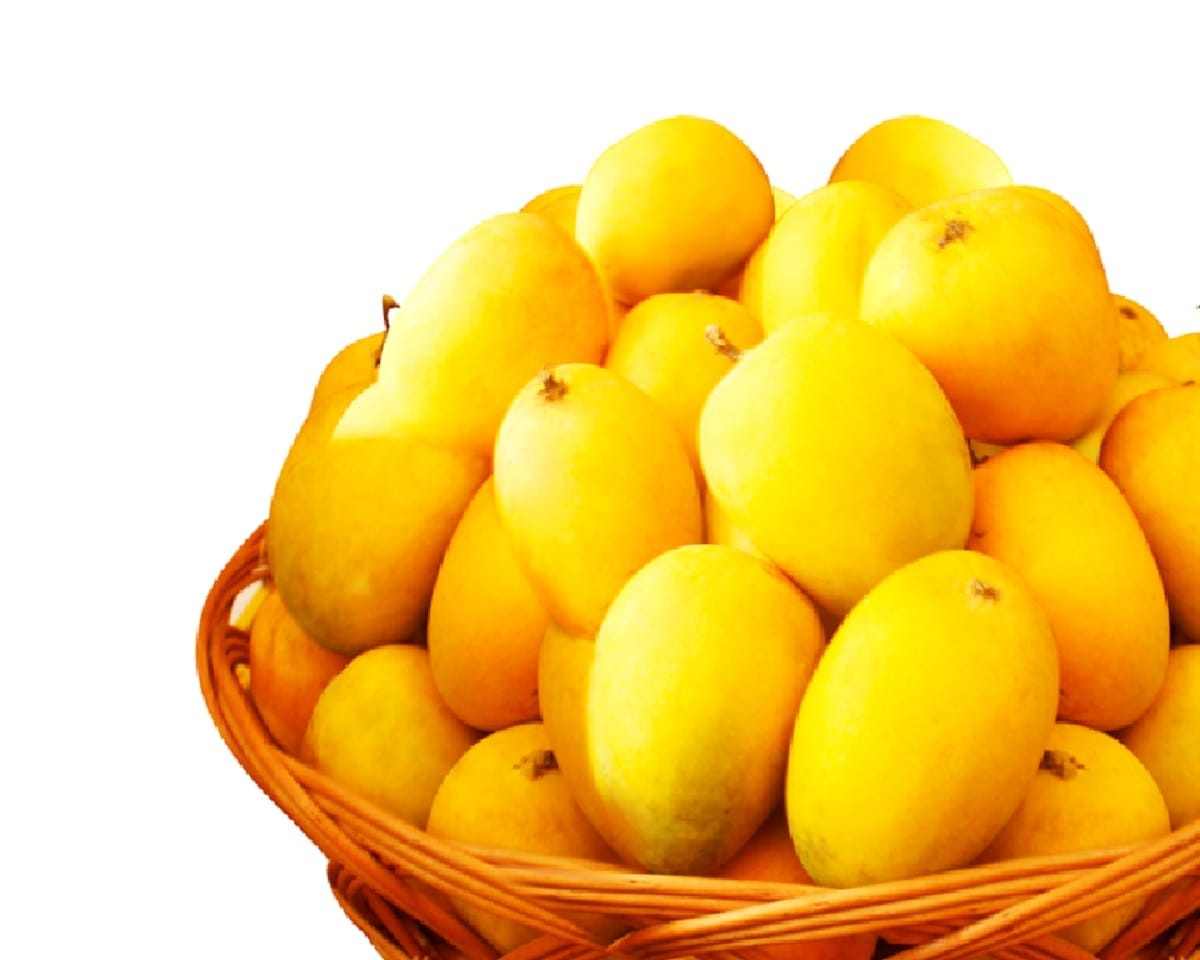
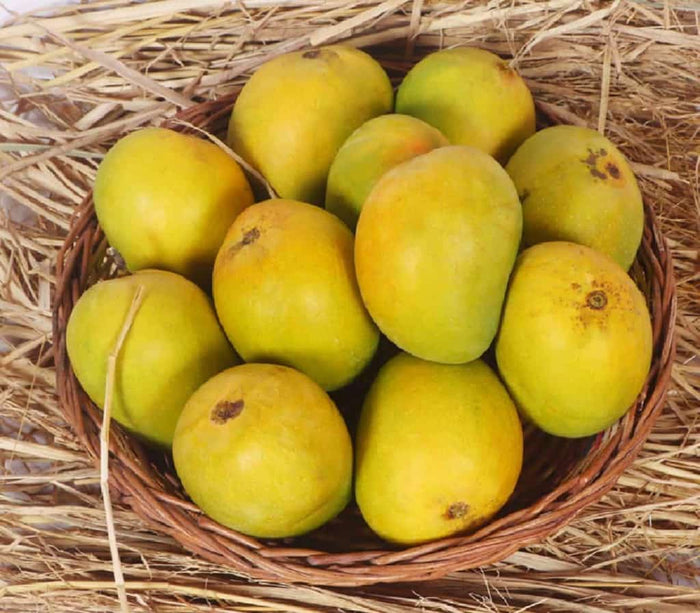
No exact single-product match for "aabush aam" exists in the catalogue. The full mango collection lists every available grade, size, and price updated in real time.
Ratnagiri vs Devgad: Which to Choose
| Feature | Ratnagiri Hapus | Devgad Hapus |
|---|---|---|
| GI Protection | GI No. 139 | GI No. 139 |
| Brix (sweetness) | 18 to 24° | 18 to 24° |
| Season window | February to June (the 2027 season starts on 1 February 2027) | February to June (the 2027 season starts on 1 February 2027) |
| Fruit weight | 150–300 g per fruit | 180–320 g per fruit |
| Box sizes | 1 doz / 2 doz / 5 kg | 1 doz / 2 doz / 5 kg |
| Indicative ₹ range | ₹1,849 to ₹5,399 per box | ₹1,849 to ₹5,499 per box |
| Skin colour at ripeness | Golden yellow, saffron blush | Deep golden, fuller blush |
| Export certified | Yes (APEDA 225579) | Yes (APEDA 225579) |
| Best for | Eating fresh, gifting | Eating fresh, pulp, export |
Delivery Across India
BlueDart air cargo handles all dispatches from Ratnagiri and Devgad. Orders placed before 12 noon IST (Monday to Saturday) are dispatched the same day. Delivery takes 1 to 3 days for most PIN codes and 1 to 2 days to most metros, depending on your PIN code. Fresh mangoes are delivered by Blue Dart to more than 4,700 PIN codes.
Each box is packed in a ventilated corrugated carton with a natural hay bed. The hay cushions fruit and absorbs moisture without trapping ethylene. Fruit arrives firm and begins finishing its ripening at room temperature. Do not refrigerate unripened fruit.
Honest limit: AlphonsoMango.in does not ship fresh Hapus outside the February to June season. No fruit is held in cold storage for off-season sale. If you order between July and January, you can choose Alphonso Mango Pulp as a year-round alternative.
How to order
- Step 1: Select Grade — Choose Ratnagiri or Devgad Hapus and the box size (1 dozen, 2 dozen, or 5 kg) from the collection page.
- Step 2: Add to Cart — Confirm grade, quantity, and delivery pincode at checkout.
- Step 3: Dispatch — Orders placed before 12 noon IST (Monday to Saturday) are dispatched the same day. Delivery takes 1 to 3 days for most PIN codes and 1 to 2 days to most metros, depending on your PIN code. Fresh mangoes are delivered by Blue Dart to more than 4,700 PIN codes.
- grade options: Ratnagiri Alphonso, Devgad Alphonso, Kesar
- size options: 1 dozen (~1 kg), 2 dozen (~2 kg), 5 kg box
- Brix range: 18 to 24° (Alphonso); 18 to 24° (Kesar)
- budget bands: see the current price on the product page
- serviceable cities: Mumbai, Delhi, Bengaluru, Hyderabad, Chennai, Pune, Kolkata, Ahmedabad, Jaipur, Surat, Nagpur, Nashik, and 800+ pincodes nationwide; exports to US, UK, UAE, Singapore, Japan via separate export inquiry
What Is Aabush Aam?
"Aabush aam" is a colloquial Hindi nickname for the Alphonso mango, the variety locally called Hapus in Marathi. The word "aabush" likely derives from "Afonso" — the Portuguese name that locals across Konkan and western Maharashtra shortened, softened, and respelled across generations of oral use. You will hear it in markets in Nashik, Nagpur, and parts of north Maharashtra.
The fruit itself is the same: fiberless, butter-textured, deep-orange pulp with a measured sweetness of 18 to 24° Brix and a distinctive saffron-floral aroma that no other mango variety replicates.
Is "Aabush Aam" the Same as Hapus or Alphonso?
Yes. Alphonso, Hapus, Hapus Amba, and Aabush Aam all refer to the same botanical variety — Mangifera indica cv. Alphonso. The name changes with region and language, not with the fruit. GI protection (GI No. 139) applies to the variety grown in the specified Konkan districts, regardless of what name a buyer uses.
What Is the Brix Level of Devgad Alphonso?
Devgad Alphonso typically measures 18 to 24° Brix at full ripeness. This places it among the sweetest commercially grown mangoes in the world. Ratnagiri Alphonso lands in the same range. The Brix reading depends on harvest timing, soil mineral content in the orchard block, and the ripening method used.
Origin and GI Protection

The Alphonso mango traces its name to Afonso de Albuquerque, the Portuguese viceroy who introduced grafting techniques to Konkan orchards in the 15th century. Local cultivators adopted the grafted variety, refined it over centuries in the laterite-rich coastal soil, and produced what the world now calls Hapus.
Prashant Powle sources fruit from 48 villages spread across Ratnagiri and Devgad talukas — including orchards in Pawas, Rajapur, and Devgad coastal blocks. Laterite soil, the Arabian Sea breeze, and the specific diurnal temperature range of the Konkan coast give the fruit its measured sweetness and aromatic depth. No other geography replicates these conditions.
What Does GI No. 139 Mean for the Buyer?
GI (Geographical Indication) No. 139 is the registered protection granted by the Government of India to the Alphonso mango grown in designated Konkan districts. It means the name "Alphonso" on a certified product legally confirms the fruit's origin. Powle Home Foods holds GI Authorised User status AU/5974/GI/139/260, Registry certificate 4163, issued 16 October 2019. No uncertified seller can legally make an equivalent claim.
Natural Ripening: No Carbide
Every box from AlphonsoMango.in is ripened on natural hay beds — a traditional Konkan practice. Fruit cut at the right maturity index is laid on dried grass in a cool, ventilated room and allowed to ripen over 3–5 days. The hay absorbs excess moisture and prevents bruising.
No calcium carbide is used. Carbide-ripened mangoes ripen from outside inward, leaving the seed area under-ripe and the skin prone to black spotting. Hay-ripened Hapus ripen uniformly, peak in the last 24 hours of the process, and arrive at your door at exactly the right stage.
How Can You Tell If Hapus Was Naturally Ripened?
Check three things. First, the aroma: naturally ripened Hapus smells floral and sweet from 30 cm away. Carbide-ripened fruit has little to no fragrance. Second, the skin: natural ripening produces a uniform golden-yellow blush with no chemical white patches near the stem. Third, the texture: press gently near the stem — the fruit should yield evenly. Carbide-ripened fruit is often hard at the centre and soft at the skin.
Season and Availability
Alphonso (aabush aam) season is sharp and short. The first fruit arrives from Devgad in early April. Ratnagiri orchards begin yielding in mid-March. Both regions finish by mid-June. After that, no fresh Hapus is available from any honest seller. The 2027 mango season starts on 1 February 2027, and fresh mangoes are out of stock until then.
AlphonsoMango.in does not sell out-of-season fresh mangoes. Between July and January, the catalogue carries Alphonso mango pulp made from the same orchard fruit, processed and packed at peak season.
Which Month Has the Best Aabush Aam?
April is widely regarded as the peak. Temperatures are ideal for uniform ripening, the crop volume is highest, and fruit size and sweetness are most consistent. May brings the second flush — slightly smaller fruit but often higher sugar concentration. Late May to mid-June yields the final crop, which many growers consider the sweetest of the season due to accumulated orchard heat.
Nutrition at a Glance
One 150 g serving of Alphonso pulp delivers approximately 100 kcal, 24 g natural sugars, 2.6 g dietary fibre, 1,400 µg beta-carotene (Vitamin A precursor), and 45 mg Vitamin C. It also contains potassium, magnesium, and folate. Because no chemical ripening agent is used, the full enzymatic profile of the fruit is preserved at consumption.
Can Diabetics Eat Aabush Aam?
Consult your physician. The glycaemic index of Alphonso mango is approximately 51–56, which places it in the medium-GI range. Portion control matters more than avoidance. A 100 g serving with a meal that includes protein and fat will moderate the blood sugar response. People on insulin or oral hypoglycaemics should monitor their readings and discuss quantities with their doctor.
Storage Tips
Unripened fruit: keep at room temperature, away from direct sun, stem-end up. Ripen in 2–4 days depending on ambient temperature. Once fully soft and aromatic, refrigerate and consume within 2 days. Never refrigerate unripened Hapus — cold halts the ripening enzyme chain and the fruit never recovers full flavour. Pulp extracted from ripe fruit freezes well for up to six months in an airtight container.
Frequently Asked Questions
What is the price of aabush aam (Alphonso Hapus) online?
Ratnagiri Alphonso starts at ₹1,849 and rises to ₹5,399 for large export-grade boxes. Devgad Alphonso is priced from ₹1,849. Exact live prices are listed at the collection page and change weekly with crop availability.
When is aabush aam season in India?
Alphonso (aabush aam) season runs February to June (the 2027 season starts on 1 February 2027). No fresh Hapus is available after June. AlphonsoMango.in does not sell out-of-season fresh fruit.
How many days does delivery take for aabush aam ordered online?
AlphonsoMango.in dispatches via BlueDart air cargo. Orders placed before 12 noon IST (Monday to Saturday) are dispatched the same day. Delivery takes 1 to 3 days for most PIN codes and 1 to 2 days to most metros, depending on your PIN code. Fresh mangoes are delivered by Blue Dart to more than 4,700 PIN codes.
Authority
AlphonsoMango.in is operated by Powle Home Foods, a Powle Home Foods brand. The business holds GI Authorised User status AU/5974/GI/139/260 for Alphonso mango (GI No. 139, Registry certificate 4163, issued 16 October 2019), FSSAI licence 10020022011783, and APEDA registration 225579. Every batch is carbide-free and naturally hay-ripened. Over 47,000 customers have ordered since 2019. The brand exports to the US, UK, UAE, Singapore, and Japan.
Read our guide to identifying real Alphonso Hapus to avoid adulterated fruit in local markets.
Source: Powle Home Foods (Powle Home Foods), GI Authorised User AU/5974/GI/139/260, sourcing from 48 villages across Ratnagiri and Devgad, Konkan, Maharashtra.
GI-certified aabush aam, naturally ripened and carbide-free. The 2027 mango season starts on 1 February 2027, and fresh mangoes are out of stock until then. Browse the full mango collection →