

Devgad mangoes are GI-tagged Alphonso fruits (GI No. 139) sourced from Sindhudurg's Devgad taluka, priced at ₹1,849 to ₹5,499 per box, available February to June, and delivered across India via BlueDart, Delhivery, Ekart or XpressBees. Orders placed before 12 noon IST (Monday to Saturday) are dispatched the same day. Delivery takes 1 to 3 days for most PIN codes and 1 to 2 days to most metros, depending on your PIN code. Fresh mangoes are delivered by Blue Dart to more than 4,700 PIN codes.
Buy Devgad Mangoes Online
Both boxes below are dispatched at 70–80% ripeness, firm for transit, fully ripe within three days of delivery. Fruit is graded by weight on our machine scanner before packing — no guesswork.
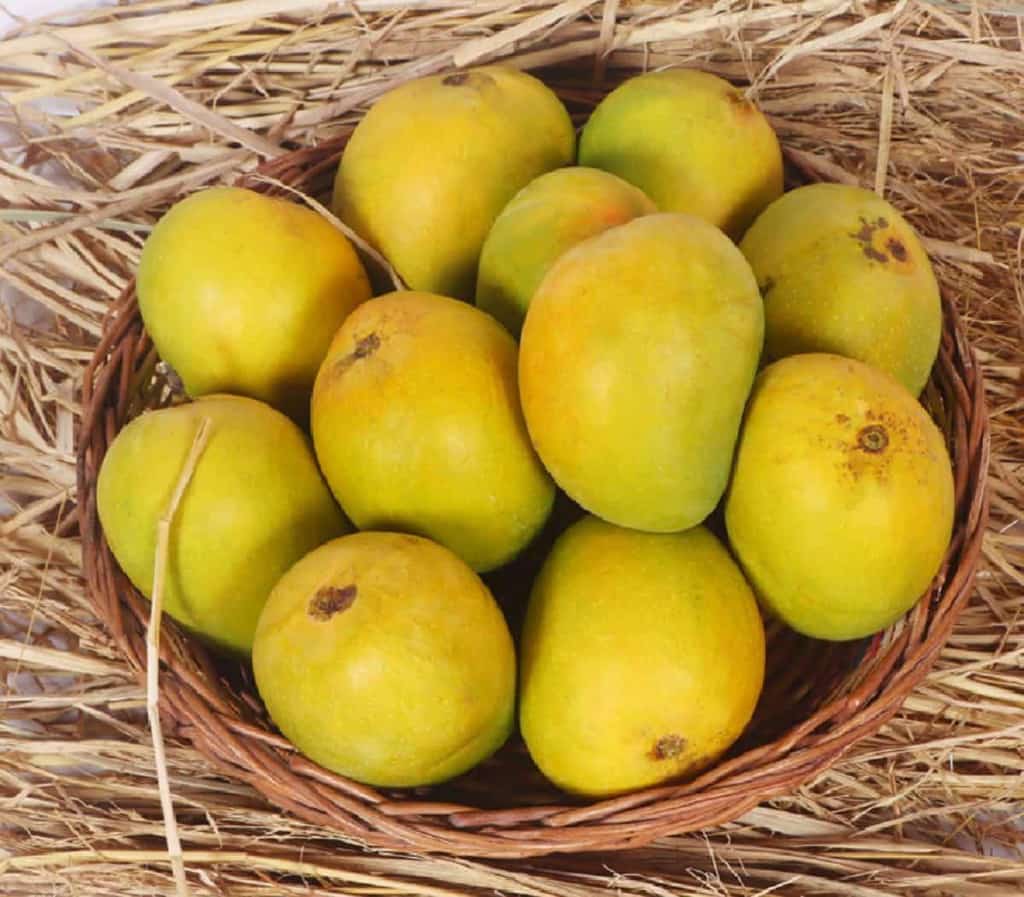
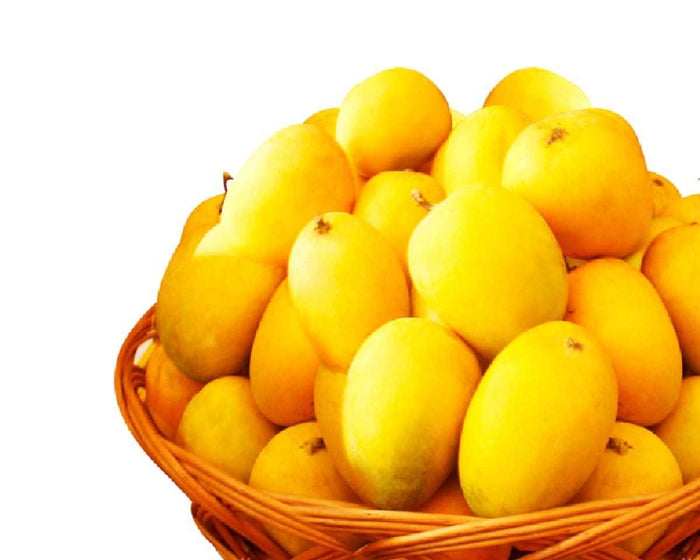
We do not sell fresh Alphonso from July to January. If a site offers Devgad mangoes outside the February–June window, the fruit is not from the current Konkan season.
Devgad vs Ratnagiri: Which Should You Choose?
Both varieties carry GI No. 139. The difference is geography, not hierarchy. Repeat-order data from our 47,000+ customers shows north India tends to reorder Ratnagiri; Mumbai leans Devgad. That split maps almost exactly to flavour preference: Devgad fruit typically sits at the upper end of the 18–24° Brix range, where the sweetness is more concentrated. Ratnagiri fruit balances sugar with a sharper aromatic edge.
| Attribute | Devgad Alphonso | Ratnagiri Alphonso |
|---|---|---|
| GI Tag | GI No. 139 (AU/6932) | GI No. 139 (AU/5974/GI/139/260) |
| District | Sindhudurg | Ratnagiri |
| Brix at full ripeness | 18–24° (typically upper end) | 18–24° |
| Season window | February to June (peak March–May) | February to June (peak March–May) |
| Fruit weight (by grade) | 150–275 g and above | 150–275 g and above |
| Indicative price range | ₹1,849 to ₹5,499 | ₹1,849 to ₹5,399 |
| Flavour character | Deeply sweet, honey-forward | Sweet with pronounced aroma |
| Popular with | Mumbai, coastal buyers | North India, gifting orders |
Weight Grades Explained
Every fruit is individually weighed before packing. Small grade is 150–180 g, Medium is 180–225 g, Extra Large is 250–275 g, and Jumbo is 275–300 g. The price difference between grades reflects the additional orchard labour to select and retain larger fruit through the season, not a difference in sweetness.
Delivery Across India
Fruit leaves the Devgad packing point within 48–72 hours of harvest. From the orchard, it travels about two hours to our Devgad packhouse, then 10–12 hours in an air-conditioned vehicle to Mumbai, where it rests 24–48 hours on a natural hay bed before dispatch. Orders placed before 12 noon IST (Monday to Saturday) are dispatched the same day. Delivery takes 1 to 3 days for most PIN codes and 1 to 2 days to most metros, depending on your PIN code. Fresh mangoes are delivered by Blue Dart to more than 4,700 PIN codes.
Courier is BlueDart, Delhivery, Ekart or XpressBees depending on your pin code. Each mango travels inside a foam-net sleeve (flat width 50–55 mm) inside a 5-ply corrugated fibreboard box with a 12-slot partition that carries transit pressure so the fruit does not. Six air holes top and bottom keep airflow active during the final ripening stage after delivery.
If your fruit arrives transit-damaged or fails quality, photograph or video it and send on WhatsApp within 24 hours of delivery. No physical return is needed. We dispatch a fresh replacement or credit your account for the next purchase — whichever you prefer.
How to Order
- Step 1 — Select grade and quantity. Open the Devgad Alphonso product page, choose your weight grade (Small through Jumbo, ₹1,849 to ₹5,499) and box size — half dozen, one dozen or two dozen.
- Step 2 — Add to cart and check out. Enter your pin code at checkout to confirm serviceability; the system selects the right courier for your location automatically.
- Step 3 — We dispatch. Your order goes out via BlueDart, Delhivery, Ekart or XpressBees depending on pin code.
Where Devgad Mangoes Come From
Devgad taluka sits on the southern Konkan coast in Sindhudurg district, Maharashtra. The laterite soil here retains very little moisture between June and November, which is exactly what conditions Alphonso trees through the dry season before flowering. Our sourcing spans 24 named villages in Devgad taluka — including Jamsande, Vijaydurg, Dahibav, Kunkeshwar, Girye and Padel — plus five villages across Malvan and Vengurla talukas: Achara, Tondavali, Kochare, Mochemad and Shiroda.
We work with 100+ partner farmer families across these villages. Orchards are typically 12–25 years old, selected on Brix consistency and how well each farmer manages alternate-bearing years. Prashant Powle visits source villages before and during the season; the grading table at the Malvan packing centre reflects what the trees actually produced that week, not what a price list promised.
How the Fruit Is Picked
No tree is shaken. No fruit falls. Each mango is cut using a Nutan/Zela pole fitted with a catching net and cutting mechanism. For tall trees, an indigenously developed length-extending pole with a camera reaches the canopy. The fruit travels from tree to packhouse in roughly two hours.
How to Verify Authenticity
GI No. 139 covers both Ratnagiri and Sindhudurg districts. Powle Home Foods holds Authorised User certificate AU/5974/GI/139/260 (Registry Certificate No. 4163, issued 16 October 2019) for Ratnagiri, and AU/6932 for Devgad. These numbers are verifiable at the GI Registry, Chennai.
Carbide-ripened mangoes typically show uneven skin colour — bright yellow patches against green, no gradation — and the skin feels rubbery rather than slightly waxy. Naturally ripened Devgad fruit has a uniform saffron-yellow colour that deepens from the shoulder toward the base, and the aroma at the stem end is detectable before you slice the fruit.
Our fruit is tested weekly through the season by Envirocare Labs Pvt. Ltd., Thane (NABL accredited, certificate TC-8284). The April 2025 report (reference 01/ETHAP2500044, issued 5 April 2025) found all 28 residues within Codex maximum residue limits; 27 of 28 were below the limit of quantification at 0.01 mg/kg. One residue — thiamethoxam at 0.013 mg/kg against a Codex limit of 0.2 mg/kg — was detected but well within the permitted level. We say independently tested, all residues within Codex limits. We do not say pesticide-free.
Ripening and Storage at Home
Your box arrives with fruit at 70–80% ripeness, deliberately firm for transit. Leave the mangoes at room temperature, out of the box, on a flat surface — not stacked. They ripen fully in about three days. Once the skin gives slightly under thumb pressure and the stem-end aroma strengthens, the mango is ready. Refrigerate only after it reaches this point; chilling an under-ripe Alphonso stops the process and dulls the flavour.
If you receive the box and plan to eat across a week, ripen three or four at room temperature and leave the rest slightly cooler (not refrigerated) to slow the curve. A ripe Devgad Alphonso holds in the fridge for two to three days without flavour loss.
What Is Spongy Tissue and Can You Avoid It?
Spongy tissue (internal breakdown) is a physiological disorder triggered by high temperatures during fruit development, not by handling or ripening method. The flesh near the seed turns pale and spongy while the outside looks perfect. Our AI/ML-assisted machine scanner checks each mango for internal deformities before packing — it is the only step that catches this, because the skin gives no sign. We cannot guarantee zero incidence across a full season because the disorder originates in the orchard during a heat event, but affected fruit caught post-harvest is removed at grading and never packed.
Nutrition: What's Actually in a Devgad Alphonso
Ripe Alphonso pulp contains roughly 30–36 mg of vitamin C per 100 g. A 100 g serving covers about 40–45% of the ICMR-NIN 2020 recommended daily intake for adult men (80 mg/day) and about 50% for adult women (65 mg/day). The deep saffron colour comes from beta-carotene, a vitamin A precursor.
Mangiferin, a polyphenol present in mango pulp, showed anti-inflammatory activity in cell studies (Govindappa et al., 2011). That is a cell study, not a clinical trial — we note it as context, not as a health claim.

Season and Availability
The Devgad Alphonso season runs from February to June, with peak availability in March, April and May. By late June, the crop from Sindhudurg is largely done. We sell nothing from July to January — no cold-store fruit, no blended batches from other regions passed off as Devgad.
Within the season, early-season fruit (February–March) tends toward the lower end of the Brix range as trees warm up from the dry period. Peak-season fruit (April) from villages like Jamsande and Vijaydurg typically hits the upper end of 18–24° Brix. Late-season fruit in May and June can be intensely sweet but the skin is thinner and transit tolerance drops, so we adjust packing density slightly.
The 2027 mango season starts on 1 February 2027, and fresh mangoes are out of stock until then.
Frequently Asked Questions
What is the price of Devgad mangoes per dozen?
Devgad Alphonso mangoes are priced at ₹1,849 to ₹5,499 per box depending on grade (Small 150–180 g through Jumbo 275–300 g) and quantity (half dozen, one dozen or two dozen). Price varies by season week and grade availability.
When is the Devgad mango season?
The season runs February to June, with peak supply in March, April and May. No fresh Devgad Alphonso is available from July to January. The 2027 mango season starts on 1 February 2027, and fresh mangoes are out of stock until then.
How fast is delivery after ordering Devgad mangoes?
Orders placed before 12 noon IST (Monday to Saturday) are dispatched the same day. Delivery takes 1 to 3 days for most PIN codes and 1 to 2 days to most metros, depending on your PIN code. Fresh mangoes are delivered by Blue Dart to more than 4,700 PIN codes.
Authority
Powle Home Foods, founded by Prashant Powle in 2017 and registered July 2019, operates AlphonsoMango.in. GI Authorised User number: AU/5974/GI/139/260 (Ratnagiri) and AU/6932 (Devgad). FSSAI licence: 10020022011783. APEDA registration: 225579. All fruit is ripened on a natural hay bed — no ethylene chambers, no calcium carbide, no artificial ripening agents. The brand exports to the US, UK, UAE, Singapore and Japan and has served 47,000+ customers since the first full commercial season in 2020.
Source: Powle Home Foods (AlphonsoMango.in), GI Registry Certificate No. 4163 issued 16 October 2019, covering Alphonso mango sourced from Devgad and Ratnagiri talukas of Maharashtra.
People Also Ask
How to identify Devgad Alphonso Mango?
Devgad Alphonso has a uniform saffron-yellow colour that deepens from the shoulder toward the base, a slightly waxy skin, and a honey-sweet aroma you catch before you cut the fruit. Carbide-ripened imitations show patchy bright yellow against green with no colour gradation, and the skin feels rubbery.
For verified Devgad fruit, check that the seller holds GI No. 139 authorisation for Sindhudurg — AU/6932 is ours, verifiable at the GI Registry, Chennai.
What is Devgad famous for?
Devgad is famous for the Alphonso mango — specifically the GI-tagged Hapus grown in Devgad taluka, Sindhudurg. The laterite coastal soil here retains almost no moisture between June and November, stressing the trees in a way that concentrates sugar in the fruit. Devgad Alphonso typically sits at the upper end of the 18–24° Brix range.
Which type of Alphonso mango is best?
There is no single answer — Devgad and Ratnagiri Alphonso both carry GI No. 139 and differ by geography, not quality. Devgad fruit is honey-forward and deeply sweet, popular with Mumbai buyers. Ratnagiri fruit balances sugar with a sharper aromatic edge and tends to be preferred in north India. Both grades reach 18–24° Brix at full ripeness.
Repeat-order data from 47,000+ customers across both varieties shows the split tracks flavour preference almost exactly — choose Devgad for sweetness, Ratnagiri if you want pronounced aroma alongside it.
Which type of mango is considered the best in the world?
Alphonso — called Hapus in Konkan — is widely regarded as the finest mango in the world for its richness, low fibre, and depth of flavour. Among Alphonso varieties, Devgad and Ratnagiri fruits from Maharashtra's Konkan coast hold GI tag No. 139 and are exported to the US, UK, UAE, Singapore and Japan every season.
For a deeper look at how GI certification works and what it means for the fruit in your box, read our guide to the Alphonso mango GI tag and our guide to identifying real Alphonso mangoes. To browse the full range — Alphonso, Kesar, Aamras and mango pulp — visit the mango collection.
Ready to order? Browse the full mango collection and check availability for the season.