

Devgad mangoes are GI-tagged Alphonso mangoes (GI No. 139) grown in Sindhudurg's Devgad taluka, harvested from March to May, priced from ₹1,849, and delivered across India in 1–3 days by Powle Home Foods from 24 Devgad-region villages.
Order Devgad Mangoes Online
Both products below ship from our Mumbai packhouse within 48–72 hours of harvest. They are available March through June. Pre-orders open before the season; once the season closes, the listings show out of stock until the following year.
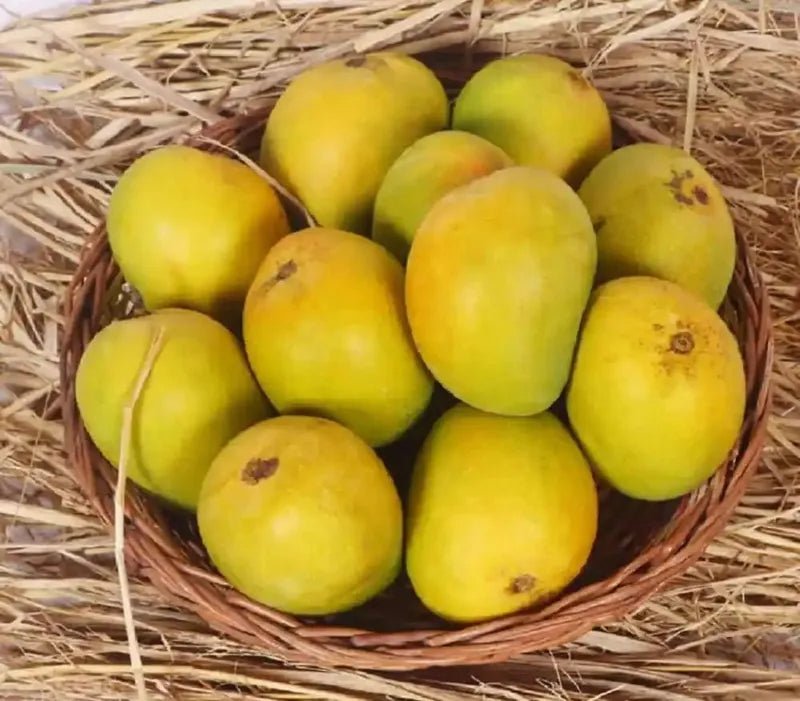
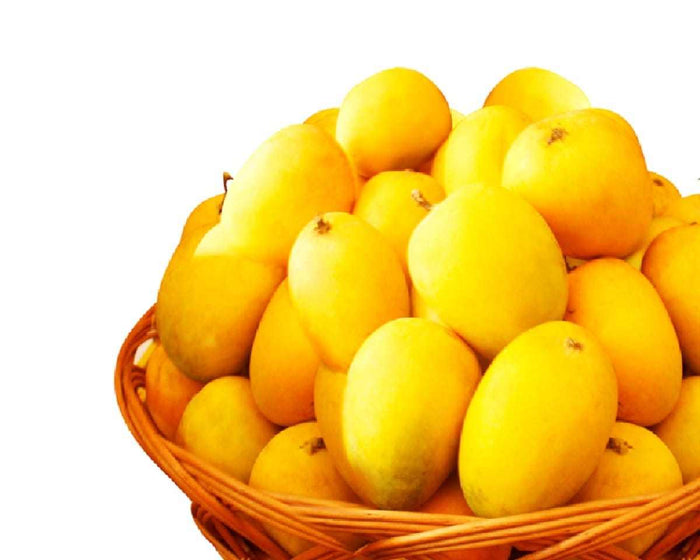
Devgad vs Ratnagiri: Which Should You Buy?
Both carry GI No. 139. The difference is terroir, not quality ranking — each suits a different palate and purpose.
| Feature | Devgad Alphonso | Ratnagiri Alphonso |
|---|---|---|
| GI Coverage | Sindhudurg district (GI No. 139, AU/6932) | Ratnagiri district (GI No. 139, AU/5974) |
| Brix at full ripeness | 18–24°, typically upper end | 18–24° |
| Fruit weight (by grade) | 150–275 g and above | 150–275 g and above |
| Skin | Notably thin, deep saffron blush | Thin, golden-yellow with saffron tinge |
| Pulp character | Rich, intensely sweet, fibre-free | Balanced sweet-tart, firm slice |
| Best for | Aamras, purees, gifting | Slicing, eating fresh, gifting |
| Price range | ₹1,849 – ₹5,499 | ₹1,849 – ₹5,399 |
| Season | February – June (peak March–May) | February – June (peak March–May) |
| Our sourcing villages | Devgad, Jamsande, Vijaydurg, Dahibav, Girye, Kunkeshwar and 18 more | Pawas, Golap, Nachane, Mirya, Kasheli and more |
Repeat-order data from our 47,000+ customers shows north India leans Ratnagiri, Mumbai leans Devgad. That's a genuine pattern in the orders, not a marketing line.
Delivery Across India
Fruit is harvested by hand using a Nutan/Zela pole with a catching net — the tree is never shaken, the fruit never falls. From tree to our Devgad packing point takes about two hours. Air-conditioned vehicles carry the fruit to our Mumbai packhouse (10–12 hours). There, each mango rests on a hay bed in a temperature-controlled room for 24–48 hours — natural ripening, no gas. Dispatch follows within 48–72 hours of harvest.
Fruit reaches metro cities in 20–24 hours. Other cities take 1–3 days. We cover 15,000–17,000 serviceable pin codes via BlueDart, Delhivery, Ekart or XpressBees depending on your pin code.
Every mango travels inside a 5-ply corrugated fibreboard box (130 gsm, alternate flute orientation) with a 12-slot partition and six airflow holes. Each fruit wears a foam-net sleeve (flat width 50–55 mm) to prevent lenticel scuffing and stem punctures. The partition carries the transit pressure, not the fruit.
We dispatch at 70–80% ripeness. The fruit ripens fully within about three days of delivery at room temperature.
How to Order
- Select your grade. Choose Small (150–180 g), Medium (180–225 g), Extra Large (250–275 g) or Jumbo (275–300 g) from the Devgad Alphonso product page. Prices run ₹1,849 to ₹5,499 depending on grade and box size.
- Add to cart. Pick half dozen, one dozen or two dozen — those are the available box options.
- We dispatch. Your order goes out via BlueDart, Delhivery, Ekart or XpressBees depending on your pin code, reaching most Indian cities in 1–3 days.
Why Devgad Produces This Mango

Devgad sits at the southern tip of Sindhudurg district, where the Western Ghats drop sharply toward the Arabian Sea. The laterite rock beneath the orchards drains quickly after rain, forcing mango roots deep. Sea-facing trees in villages like Vijaydurg, Girye and Kunkeshwar receive a consistent salt-laden breeze that influences skin thickness and pulp density in ways that are measurable at harvest — Brix at full ripeness runs 18 to 24°, with Devgad fruit typically reading at the upper end of that range.
Prashant Powle has sourced from 24 Devgad-taluka villages since the early seasons, including Devgad, Jamsande, Dahibav, Hindale, Naringre, Kanyabag, Padel, Rameshwar, Waghotan, Mithbav, Katwan, Aare, Shirgaon, Tambaldeg, Ilve, Munge, Khavane, Tiravade, Koregaon, Baparde, Mandivali and others in Malvan and Vengurla talukas (Achara, Tondavali, Kochare, Mochemad, Shiroda). Orchards are typically 12–25 years old, selected on Brix consistency and alternate-bearing management. That last criterion matters: trees that are pushed for yield every year produce inconsistent fruit.
What is the Brix level of Devgad Alphonso?
At full ripeness, Devgad Alphonso measures 18 to 24° Brix. Devgad fruit typically sits at the upper end of that range relative to Ratnagiri fruit from the same season. Brix shifts week to week through the season — early-season fruit (February–March) tends lower; late-April to May fruit tends higher as heat concentration increases.
When is the Devgad mango season?
The season runs February to June. Peak quality and peak volume both fall in March, April and May. By late June, yields drop sharply and quality becomes inconsistent. We stop selling fresh Devgad Alphonso once that point arrives. No fresh Devgad mango is available July through January — any vendor claiming otherwise is selling cold-stored or out-of-region fruit.
How to Identify Genuine Devgad Alphonso
The counterfeit Alphonso problem is real. Carbide-ripened imitations from non-GI regions reach markets every season with the word "Devgad" on the crate. Here is what genuine fruit looks like and why ours differs.
Visual and sensory markers of real Devgad Hapus
- Skin colour is deep yellow with a distinct saffron-orange blush toward the stem end — not a uniform pale yellow (that is usually carbide).
- The stem end smells intensely of ripe mango before you cut. Carbide fruit smells faintly chemical or has almost no aroma when uncut.
- The skin is thin. When you press gently, a ripe Devgad Alphonso yields with almost no resistance. The flesh underneath is saffron-deep, not pale orange.
- A naturally ripened fruit has no green patches that stay green. Carbide-ripened fruit often shows green near the base that never fully turns.
What the GI tag actually guarantees
GI No. 139 covers both Ratnagiri and Sindhudurg districts. Powle Home Foods holds Authorised User status AU/5974/GI/139/260 (GI Registry Certificate No. 4163, issued 16 October 2019) for Ratnagiri, and AU/6932 for Devgad. An Authorised User has gone through formal GI Registry verification — it is not a self-declared label. When you see that number on our packaging, it means the fruit's origin can be traced back to a specific district and a specific grower network.
The GI tag does not, by itself, guarantee carbide-free ripening. That is where our ripening practice and lab testing are separate guarantees.
Ripening and Supply Chain
We use natural hay-bed (Aadi) ripening only, in temperature-controlled rooms. No ethylene chambers. No calcium carbide. No artificial ripening agents of any kind. The 24–48 hours at our Mumbai packhouse is natural ripening on hay, monitored, not gas-triggered.
Before the fruit reaches the hay bed, every mango goes through post-harvest hot-water treatment to reduce surface issues and extend shelf life. Each fruit is then weighed and graded. AI/ML-assisted machine scanning checks for internal defects — spongy tissue is the main disqualifier — and external deformities before packing. A mango that fails either check does not ship.
Envirocare Labs Pvt. Ltd. (Thane, NABL-accredited, certificate TC-8284) tests for pesticide residues weekly through the season. Their report 01/ETHAP2500044 (issued 5 April 2025) tested 28 residues: 27 were below the limit of quantification (0.01 mg/kg); thiamethoxam was detected at 0.013 mg/kg against a Codex maximum of 0.2 mg/kg — well within limits. We say "independently tested, all residues within Codex limits." We do not say "pesticide-free."
What You Get in Every 100 g
Ripe Alphonso pulp contains roughly 30–36 mg vitamin C per 100 g. A 100 g serving meets about 40–45% of the ICMR-NIN 2020 recommended daily intake for adult men (80 mg/day) and about 50% for adult women (65 mg/day). The pulp is fibre-free in texture but the fruit itself contributes dietary fibre from the skin and fibrous tissues near the seed.
Mangiferin — a bioactive compound in mango pulp — showed anti-inflammatory activity in a cell study by Govindappa et al. (2011). That is a cell study, not a clinical trial, so we flag it as preliminary. The eating case for Devgad Alphonso does not need laboratory backing: 22° Brix and saffron-coloured, fibre-free pulp is its own argument.
Frequently Asked Questions
What is the price of Devgad mangoes online?
Devgad Alphonso mangoes from AlphonsoMango.in start at ₹1,849 and go to ₹5,499, depending on grade (Small through Jumbo) and box size (half dozen to two dozen). Pre-orders open before the March peak.
When is the Devgad mango season?
February to June, with peak harvest in March, April and May. No fresh Devgad Alphonso is available July to January — the season closes and listings show out of stock until the following year.
How fast are Devgad mangoes delivered?
We dispatch via BlueDart, Delhivery, Ekart or XpressBees depending on your pin code. Metro cities receive delivery in 20–24 hours; all other cities in 1–3 days across 15,000–17,000 serviceable pin codes.
Authority
Powle Home Foods (AlphonsoMango.in) was founded in 2017 by Prashant Powle and registered in July 2019. We hold GI Authorised User status AU/5974/GI/139/260 and AU/6932 (GI No. 139), FSSAI licence 10020022011783, and APEDA registration 225579. All fruit is natural hay-bed ripened — no carbide, no ethylene chambers. We have served 47,000+ customers since 2020, with a 4.35★ rating on Judge.me from verified buyers.
Source: Powle Home Foods (AlphonsoMango.in), Envirocare Labs NABL report 01/ETHAP2500044, issued 5 April 2025 — all 28 residues within Codex maximum residue limits.
For a deeper look at how Alphonso ripening works and why carbide changes the fruit's flavour profile, read our guide on natural Alphonso mango ripening. If you want to understand GI tagging in detail — what it means legally and what it does not cover — see our Alphonso mango GI tag guide. Browse the full seasonal range in our Alphonso mango collection.